
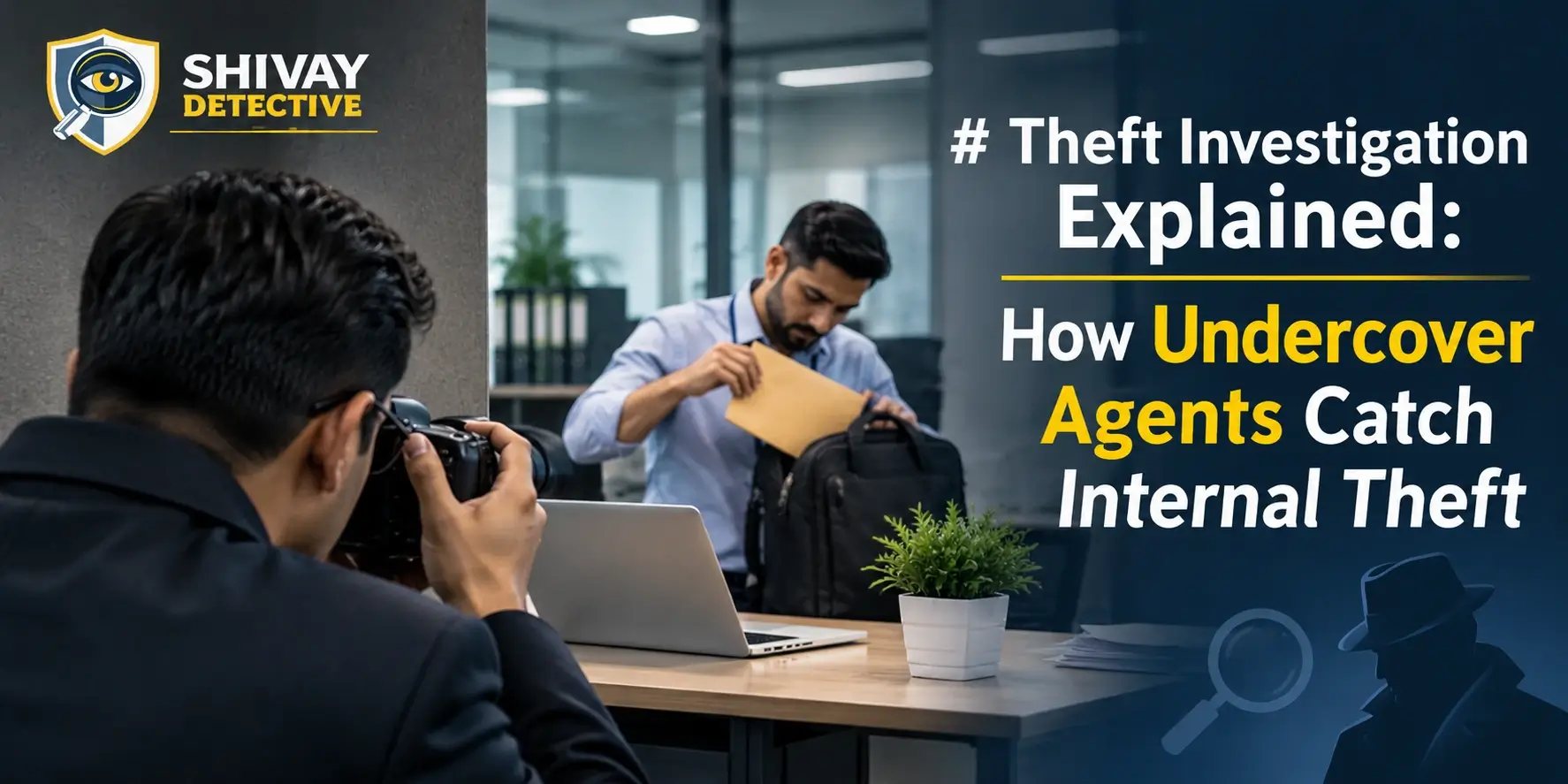
Theft Investigation Explained: How Undercover Agents Catch Internal Theft
Picture a warehouse where stock is short by a few percent every month. The audits confirm the gap, the cameras show nothing unusual, and no one can explain it. That is the point where many companies realise they need a deeper theft investigation than records and footage can provide.
This guide explains how an undercover operation works from start to finish: how an agent is placed, what they observe, how evidence is documented, and how the whole process stays legal. If you want the wider context first, read why corporate investigation services matter.
What is an undercover theft investigation?
An undercover theft investigation is a covert inquiry in which a trained investigator works inside the business, usually in the area where losses occur, to observe operations from within. The agent does the normal job of the role while quietly recording how stock, cash or data goes missing.
It differs from CCTV and audits in one key way. Cameras and records show what happened. An agent can show who is behind it, how it is done day to day, and who helps. That makes it especially useful for theft rings where employees work with drivers, vendors or customers.
Signs of internal theft that justify an undercover operation
Not every discrepancy needs an undercover agent. Businesses normally take this step only after concrete warning signs appear:
- Inventory shrinkage that continues after regular audits and tighter controls
- Cash register shortfalls, or a pattern of voided transactions, fake refunds and unauthorised discounts
- Goods leaving loading docks or warehouses without proper paperwork
- The same person being present each time a discrepancy appears
- Suspected collusion between staff and outside drivers, vendors or customers
The decision should rest on data such as inventory gaps or register anomalies, not on rumour. Acting on gossip risks accusing an innocent employee and weakening the entire case.
The three main types of undercover roles
People often ask about the three main types of undercover operations. In workplace cases they are usually:
- Embedded employee. The agent is hired into an open role and works alongside suspects for weeks or months. This is the most common choice for internal theft in warehouses, factories and back offices.
- Customer-facing observer. Mystery shoppers or observers test cash handling, billing and returns at counters and stores without joining the staff.
- Contractor or vendor cover. The agent enters as a driver’s helper, loader, cleaner or service worker, which suits theft linked to transport, receiving or disposal.
The right type depends on where the losses occur. A theft investigation in a retail chain looks very different from one in a distribution centre.
Step 1: How an undercover agent is placed
Placement is the most sensitive stage, and it is planned long before the agent walks in.
- Scoping with a tiny circle. The investigator briefs only the owner or one senior decision-maker, and legal counsel where needed. Department heads, HR staff and the suspects’ colleagues are kept out unless there is a clear reason.
- A role that fits the problem. The position must give natural access to the area where losses occur, such as receiving, dispatch, returns or the cash desk.
- A credible cover story. The agent needs a believable work history and the real skills to do the job. A weak cover is the most common reason undercover operations fail.
- A normal hiring route. The agent is onboarded through a regular vacancy, staffing agency or contractor arrangement so nothing looks unusual to staff.
Our undercover agent service handles this stage end to end, including cover creation and onboarding.
Step 2: What the agent observes
Once inside, the agent’s job is to observe, not to provoke. They carry out the role normally while quietly tracking:
- Blind spots. Loading docks, staging areas, amended orders and other places where digital records stop.
- Timing. What happens during busy periods, shift changes and off-hours when supervision is thin.
- Methods. How goods leave without exit permits, how records are altered, and how returns, breakage and disposal are manipulated.
- Networks. Whether one person or a group is involved, and whether outsiders such as transporters or buyers are part of it.
Investigators often map the theft in three stages: how items are taken, how the loss is concealed, and how stolen goods are moved off-site. A good agent never encourages anyone to steal. The aim is to record what is already happening, not to create it.
Step 3: How evidence is documented
A suspicion is not evidence. Documentation is what turns an operation’s findings into something the client can act on.
- Detailed daily logs. Each observation is written soon after it happens, with the date, time, place, method and people involved.
- Cross-checks against records. Findings are matched with inventory logs, billing entries, dispatch papers, attendance data and CCTV footage to build a verified timeline.
- Lawful supporting material. Photographs, recordings or register-to-video overlays are used only where the law and company policy allow, with a clear chain of custody showing who handled each item and when.
- A final report. It separates facts from inferences, so it can support disciplinary action, a police complaint or legal proceedings.
Weak or contaminated evidence can sink an otherwise strong case, so careful documentation matters as much as the observation itself.
Step 4: Keeping a theft investigation legal and safe
Done properly, an undercover operation protects the client as much as it catches the thief.
- No entrapment. Agents may not encourage, suggest or pressure anyone to commit an offence they would not otherwise commit. They watch and record.
- Privacy compliance. Surveillance must follow labour, privacy and data protection law, including India’s data protection requirements. Private areas such as restrooms are off limits, and audio and video recording rules must be respected.
- No unlawful access. No hacking, illegal phone tapping, trespass or access to private accounts or devices. Evidence gathered this way can be rejected and can expose the client to liability.
- Confidentiality. Findings go only to the authorised contact. Careless sharing can defame an innocent person or tip off the culprit.
- Legal counsel early. Review the findings with a lawyer before any termination, complaint or recovery action.
- Agent safety. A clear exit plan should exist if the cover is at risk.
Laws vary by state, so have your lawyer confirm what applies to your business.
What happens after the investigation
Once a clear pattern is documented, management and the investigators review the findings, hold structured interviews and decide on the next step. This is usually disciplinary action or termination, a police complaint, loss recovery, or a combination.
The most valuable outcome is often the least visible one: fixing the control gaps that allowed the theft. A theft investigation that ends with the thief gone but the loophole open will simply repeat itself. Stronger hiring checks, such as pre-employment verification, help keep the same problem from walking back in.
Undercover work also surfaces related problems, such as safety shortcuts or policy gaps, that would otherwise go unnoticed.
Is an undercover agent right for your business?
An undercover agent makes sense when losses repeat despite audits and cameras, when you have strong suspicion but no proof, or when you suspect collusion. For a single, isolated discrepancy, a records-based employee theft investigation may be enough.
If you are dealing with ongoing losses, speak to our team in confidence. A short, private conversation will tell you whether an undercover theft investigation is the right next step.
Frequently asked questions
How long does an undercover operation usually take?
Most operations run from a few weeks to a few months. The length depends on how often the theft happens, how many people are involved and how quickly the agent can gain access to the problem area. A simple pattern may be proven in weeks, while collusion cases take longer.
Is it legal to place an undercover agent in your own company?
Generally yes, when the operation is lawful: no entrapment, no illegal recording or hacking, and proper handling of employee data. An employer has the right to protect its business, but rules differ by state and situation, so confirm the plan with your lawyer first.
Can undercover findings be used for termination or in court?
Yes, if the evidence was gathered lawfully and documented carefully. Dated logs, records that confirm the agent’s observations and a clear chain of custody make a report far stronger. Your lawyer should review it before you terminate anyone or file a complaint.
How much does an undercover operation cost?
Cost depends on the duration, the role the agent must fill, the location and the size of the team. Because every case differs, a reputable agency scopes the problem first and then gives a quote. Ask what is included, such as reporting and legal-ready documentation, before you commit.
Can a small business use an undercover agent?
Yes. Small businesses often feel theft more sharply because one trusted employee may control cash or stock. An agent can be placed in a small team as a helper or part-time worker. The key requirement is concrete evidence of loss, not company size.